The Three Gorges Dam is one of the most striking water conservancy projects on the Yangtze River. Many tourists who visit the dam in Yichang ask me two questions: When was the Three Gorges Dam built? Why was the Three Gorges Dam built?
Looking at the dam today, it is easy to assume it is merely a hydropower project. In reality, from its initial concept to formal construction, the Three Gorges Project went through decades of discussions, surveys and demonstrations. Flood control was a major driving force behind the project. Power generation and improved Yangtze River shipping were also key objectives.
When researching the history of the Three Gorges Project, I found that its construction timeline cannot be summed up by a single year as seen in some simple introductions. Construction officially began in 1994; the main dam reached its designed crest elevation in 2006; the construction tasks outlined in the preliminary design were completed in 2009; and all 32 large generator units went into operation in 2012. Different years mark different project milestones.
Below I will explain why the Three Gorges Dam was built and how it was constructed, covering the history of Yangtze floods, the project timeline, its construction purposes, as well as resettlement and ecological controversies.
1. When Was the Three Gorges Dam Built?
When asked “When was the Three Gorges Dam built?”, I first clarify the distinction between the official start of construction, completion of the main dam structure, and commissioning of all generator units.
Three Gorges Dam: Key Dates
- 1992: Project approved. The National People’s Congress passed the resolution on building the Three Gorges Project.
- 1994: Official construction launch. The groundbreaking ceremony was held on December 14.
- 2006: The main dam reached its designed elevation. The full dam body reached the 185-meter crest elevation.
- 2009: Completion of main construction work. The construction tasks in the preliminary design were finished.
- 2012: Full power generation. The last large generator unit came online.
- 2016: Trial navigation of the ship lift. The ship lift entered trial operation.
Sources: project introductions from the Chinese Academy of Engineering, China Three Gorges Corporation and Xinhua News Agency.
1.1 1992: The Three Gorges Project received official approval
On April 3, 1992, the National People’s Congress adopted the Resolution on the Construction of the Yangtze River Three Gorges Project. The project moved from the long-term planning and research phase into formal preparation for implementation.
However, 1992 was not the year construction started. The project still required site preparation, land development, resettlement and supporting infrastructure work.
1.2 1994: Official construction of the Three Gorges Dam began
On December 14, 1994, the Three Gorges Project officially started construction.
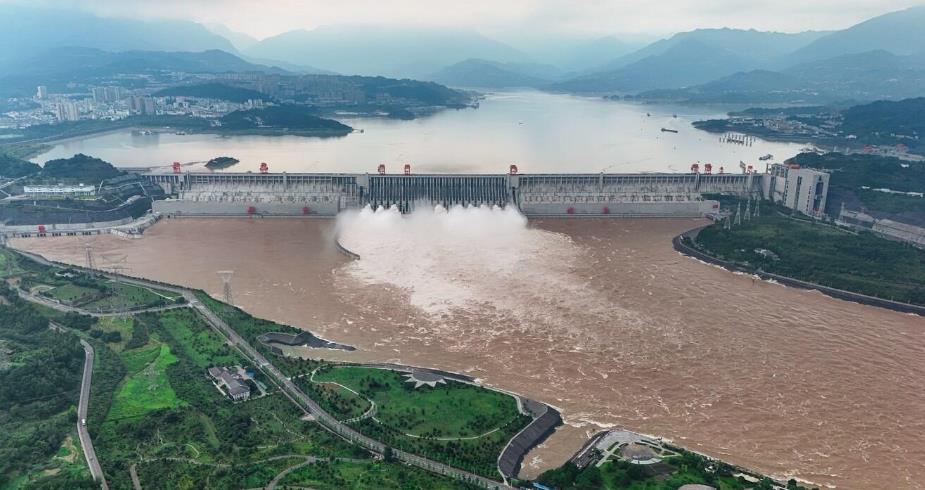
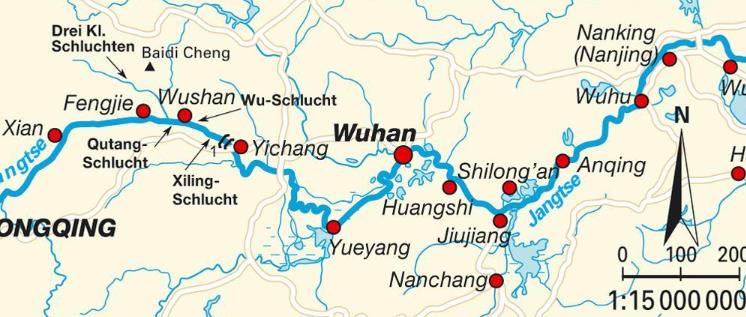
The project sits on the main channel of the Yangtze River within Yichang City, Hubei Province, with the dam site at Sandouping. The full project is far more than just a concrete dam. It also includes a hydropower station, navigation facilities, power transmission and transformation works, and resettlement programmes.
1.3 2003: Impoundment began and power generation started
In June 2003, the Three Gorges Reservoir began filling, with an initial water level of 135 meters.
In the same year, the permanent ship lock entered trial navigation. The first 700 MW water turbine generator unit was put into operation in July. This means the project started delivering power and shipping benefits before the main works were fully finished.
1.4 2006: The main dam reached the 185-meter elevation
In May 2006, the Three Gorges Dam reached its designed crest elevation of 185 meters along its entire length.
It is important to separate “completion of the main dam body” from “completion of the entire Three Gorges Project”. Reaching the designed elevation does not mean all generator units, supporting facilities and follow-up works were finished.
1.5 2009–2012: From main construction completion to full power generation
In December 2009, the Three Gorges Project finished the construction tasks specified in its preliminary design.
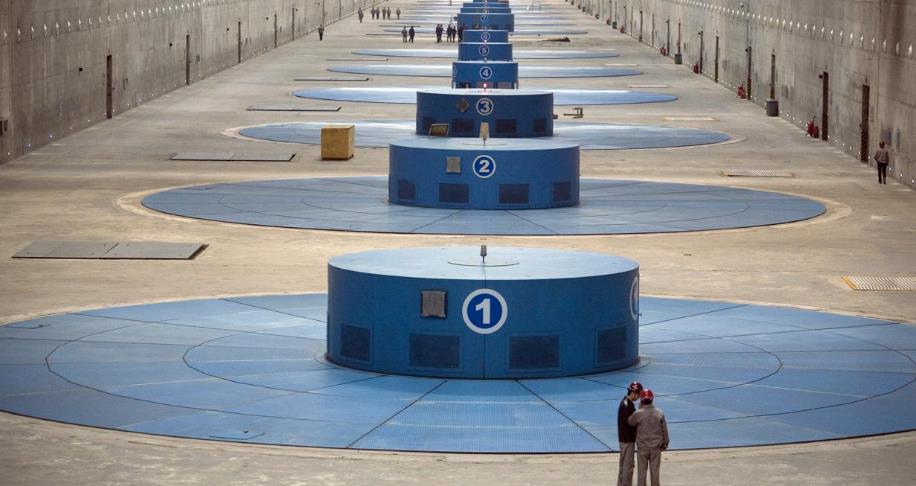
In July 2012, the last large water turbine generator unit went into service. All 32 large units of the Three Gorges Power Station were commissioned, bringing the total installed capacity to 22,500 MW.
Therefore, if answering “When was the Three Gorges Dam built?” from the perspective of all large generator units becoming operational, 2012 is the key year.
In addition, the Three Gorges ship lift entered trial navigation in 2016, which explains why some sources extend the project timeline to this later milestone.
2. Why Was the Three Gorges Dam Built?

In my view, to understand the purpose of the Three Gorges Dam, one must first understand the severe flood risks that historically affected the Yangtze River basin.
The Yangtze is a major water system in China with a vast drainage area and countless tributaries. Its middle and lower reaches host many cities, farmlands and large populations. During flood seasons, sustained rainfall, upstream inflow and tributary floods can combine and create heavy flood pressure downstream.
The Three Gorges Project had three primary construction goals: flood control, power generation and improved navigation.
2.1 Flood control: Reducing flood risks in the middle and lower Yangtze
Flood control was one of the most important reasons for building the project.

The middle and lower Yangtze have relatively flat terrain, and some river sections have limited flood discharge capacity. When a basin-wide flood occurs, floodwater from upstream continuously flows downstream and pushes water levels sharply higher.
The Yangtze suffered many catastrophic floods in history:
- 1931 flood: Severe flooding hit the middle and lower Yangtze. Cities including Wuhan and Nanjing were affected, and many dikes burst.
- 1935 flood: Another major flood struck the Yangtze basin, with heavy damage in the Jingjiang area.
- 1954 flood: A long-lasting basin-wide flood pushed water levels above historical records at many hydrological stations in the middle and lower reaches.
- 1998 flood: Severe flooding across the Yangtze basin further highlighted the urgency of building a comprehensive flood control system for the river.
These floods raised awareness of integrated management for the Yangtze basin, and the flood control concept for the Three Gorges Project gradually took shape against this historical backdrop.
The Three Gorges Dam helps manage floods through reservoir regulation. Before the flood season, the reservoir level is lowered according to operation rules to reserve flood storage capacity. When large floods arrive from upstream, the reservoir temporarily holds back part of the flood volume, slows the flood peak’s downstream movement, and controls outflow based on downstream water conditions.
The total storage capacity of the Three Gorges Reservoir is approximately 39.3 billion cubic meters, including around 22.15 billion cubic meters of flood storage capacity.
One easily overlooked fact: the Three Gorges Dam cannot eliminate all Yangtze floods. If floods mainly come from tributaries below the dam, from local heavy rainfall, or from simultaneous extreme rainfall across multiple regions, the reservoir’s regulation capacity is limited. It is a vital component of the Yangtze flood control system, not a single solution to every flood threat.
2.2 Power generation: Supplying electricity for industrial and urban growth

The second major purpose was power generation.
When the Three Gorges Project was being planned, China’s industrial and urban development created growing demand for electricity. A large hydropower station uses the drop of river water to generate large-scale power for the grid.
Key figures for the Three Gorges Power Station:
- Total installed capacity: 22,500 MW
- Large water turbine generator units: 32
- Capacity of each large unit: 700 MW
- Annual power output: varies according to water inflow and operation scheduling
Compared with coal-fired power, hydropower does not require continuous coal combustion to produce steam, so it does not directly emit the same smoke and combustion pollutants as coal plants during power generation.
Hydropower is not without environmental impacts, however. Large reservoirs alter river ecology, hydrological processes and surrounding land use. Hydropower cannot simply be regarded as an energy source with no environmental costs at all.
The significance of the Three Gorges Power Station lies not only in producing large volumes of electricity, but also in transmitting power across the grid to support energy supply in other regions.

The third construction goal was to improve navigation.
The Yangtze is China’s key inland shipping corridor. In the past, parts of the river were constrained by fluctuating water levels, channel conditions and canyon geography, creating limits for large vessels.
After the formation of the Three Gorges Reservoir, water levels and channel conditions improved in the river sections upstream of the dam.
To allow ships to cross the dam, the project included a double-line five-stage ship lock.
The operating principle of the ship lock is straightforward: a ship enters a lock chamber, and water is added or drained to raise or lower the water level until it matches the upstream or downstream channel level, so the ship can continue its voyage.
The project also built a ship lift, offering an alternative crossing method for vessels that meet the requirements.
From a shipping perspective, the Three Gorges Dam is more than a hydropower station; it is an important node within the Yangtze shipping system.
3. The History of the Three Gorges Dam: A Plan That Took Decades
If measured from the official construction start, the project began in 1994. If traced back to its earliest concept, its history stretches much further back.
3.1 1919: The earliest development concept
In 1919, Sun Yat-sen put forward ideas for developing the hydropower resources of the Yangtze in his International Development of China, including the concept of building a large water conservancy project in the Three Gorges area.
At that time, China lacked the industrial foundation, engineering technology and capital to implement the plan immediately.
3.2 1930s–1940s: Surveys and design studies
In the 1930s, relevant institutions began investigations and research in the Three Gorges area.
In the 1940s, engineers from the US Bureau of Reclamation also took part in surveys and design discussions. The project was not carried out due to the political, economic and wartime circumstances of the era.
3.3 1950s: Floods made flood control more urgent
The severe Yangtze flood of 1954 put cities such as Wuhan under heavy flood pressure.
After that, planning and research for the Three Gorges Project moved forward. People began discussing the role of a large water conservancy project in flood control, power generation and shipping as part of integrated management of the Yangtze basin.
3.4 1980s–1990s: Long demonstrations and final approval
After years of surveys, technical research and design evaluation, the Three Gorges Project entered a deeper decision-making phase in the 1980s and 1990s.
In 1992, the National People’s Congress passed the resolution to build the project. Construction officially started in December 1994.
Roughly 75 years passed between the early concept in 1919 and the official construction launch in 1994.
This shows the Three Gorges Dam was not a hastily decided project. It went through long-term planning and multiple rounds of discussion.
4. The Environmental and Social Controversies of the Three Gorges Dam
The enormous scale of the Three Gorges Project brought far-reaching economic, social and ecological consequences to the Yangtze basin.
When introducing the Three Gorges Dam, we should not only talk about its benefits for power, flood control and shipping, but also objectively cover the controversies that emerged during construction.
4.1 Resettlement: Around 1.3 million people relocated

After the Three Gorges Reservoir was filled, some river valleys, towns and villages upstream were inundated.
Large numbers of residents had to be relocated to make space for the reservoir and supporting works. Public sources generally state that approximately 1.3 million people were resettled for the project.
Resettlement involved much more than simply moving houses:
- Changes to existing land and agricultural livelihoods
- Employment opportunities in new settlements
- Public services including schools, hospitals and transport
- Adjustments to household income and living habits
- Shifts in community ties and local culture
A World Bank document on the social impacts of the Three Gorges Project records the affected population at roughly 1.3 million people and notes that resettlement formed a major part of the project’s costs.
For some residents, relocation brought new housing and living environments. For others, leaving land their families had occupied for generations, finding new jobs and adapting to new communities created long-term challenges.
Therefore, evaluating the social impact of the project requires looking beyond the relocation number to track employment, income and quality of life for resettled people.
4.2 Ecological environment: Changes to river hydrology and wildlife habitats
Once the large reservoir formed, the river’s natural hydrological rhythms were altered.
The main ecological impacts of the Three Gorges Project include:
- Changes in water flow and sediment: Impoundment altered flow velocity and sediment transport in some river sections. Sediment deposition inside the reservoir and downstream channel erosion changed river geomorphology and bank lines.
- Impacts on fish: The dam blocked natural migration routes for some fish species, and impoundment changed spawning and habitat conditions. Changes in populations of fish such as the four major Chinese carps have long been monitored by research and conservation agencies.
- Water quality and aquatic ecology: Changes in flow speed, nutrient distribution and water exchange in the reservoir created risks of water quality shifts and algal growth in some local areas.
- Geological hazard risks: Periodic rises and falls of reservoir water levels can affect slope stability. Landslides and collapses have occurred in parts of the reservoir zone, requiring continuous monitoring and management of bank safety.
These issues have multiple contributing factors, including regional geology, rainfall, land use and reservoir operation rules.
4.3 Why long-term ecological management is still required
Completion of the large water conservancy hub did not end its environmental impacts.
Reservoir operation, sediment evolution, fish protection and bank safety require ongoing management.
Relevant authorities and research institutions continue ecological monitoring, fish conservation, geological hazard treatment and water environment improvement work.
I believe the key to understanding the ecological controversies is recognising that large water projects usually bring both benefits and environmental costs, and long-term post-construction management is just as important.
5. Was the Three Gorges Dam Worth Building?
From its stated construction objectives, the Three Gorges Dam delivers three core functions: flood control, power generation and shipping.
A full assessment also needs to consider resettlement, ecological protection, geological safety and long-term operational costs.
I prefer to view the project from several specific angles:
| Perspective | Contributions of the project | Issues requiring ongoing attention |
|---|---|---|
| Flood control | Retains some upstream floodwater and reduces flood peaks | Cannot control all basin-wide or local storm floods |
| Power generation | Delivers large-scale hydropower capacity | Ecological impacts from hydropower development |
| Shipping | Improves navigation conditions in some upstream river sections | Lock operation and shipping scheduling |
| Resettlement | Drives the reorganisation of reservoir towns and infrastructure | Employment and quality of life for relocated residents |
| Ecology | Promotes basin-wide ecological monitoring and restoration | Risks to fish populations, water quality, sediment and geological stability |
The Three Gorges Project had comprehensive development goals. It cannot be judged solely by power output or dam dimensions.
For visitors, what they see today is a large, fully operational water control hub. For the Yangtze River basin as a whole, however, it remains an engineered system requiring continuous regulation, monitoring and management.
6. Visiting the Three Gorges Dam: What Can You See Today?

If you plan to travel in China, the Three Gorges Dam is well worth a visit.
The dam is located in Yichang City, Hubei Province. Visitors can travel to the Three Gorges Dam Tourist Area from central Yichang.
Highlights to see on a visit:
- Tanzi Ling Viewing Platform: A classic viewpoint with elevation offering an overview of the full dam layout, Yangtze valley and reservoir area.
- 185 Viewing Platform: Lets visitors understand the 185-meter crest elevation parameter and view the dam structure up close.
- River Closure Memorial Park: Exhibits key historical moments of the project and tells the story of the river closure and construction process.
- Five-stage Ship Lock: Subject to tour arrangements and on-site conditions, visitors can learn how the lock enables ships to cross the dam; it is a core part of the shipping function.

If you are interested in engineering technology, I suggest you look beyond the dam’s height and length and pay attention to reservoir scheduling, generator sets and the working principles of the ship lock. This makes it easier to understand why the Three Gorges Dam was built and what role it serves across the Yangtze basin.
7. Frequently Asked Questions About the Three Gorges Dam
7.1 When was the Three Gorges Dam built?
The Three Gorges Project officially began construction in December 1994. The main dam reached its designed 185-meter elevation in 2006, the preliminary design construction tasks were finished in 2009, and all 32 large generator units entered operation in 2012.
7.2 When was the Gorges Dam built?
If “Gorges Dam” refers to the Three Gorges Dam on the Yangtze in China, official construction started on December 14, 1994.
7.3 When was the 3 Gorges Dam built?
“3 Gorges Dam” is a common shorthand for the Three Gorges Dam. Construction began in 1994, and all large generator units were commissioned in 2012.
7.4 Why was the Three Gorges Dam built?
It was built mainly to improve flood protection for the middle and lower Yangtze, generate large-scale hydropower, and improve shipping conditions on some sections of the upper Yangtze.
7.5 How long did it take to build the Three Gorges Dam?
Counting from the official construction start in 1994 to the commissioning of all large generator units in 2012, the process took roughly 18 years. If counted from the early conceptual proposal in 1919 to full power generation in 2012, nearly a century of planning, evaluation and construction was involved.
7.6 Was the Three Gorges Dam completed in 2009 or 2012?
These years mark different milestones. In 2009, the construction tasks in the preliminary design were completed. In 2012, the last large generator unit came online and all 32 large units were commissioned. Both statements are consistent.
7.7 What are the main benefits of the Three Gorges Dam?
The main benefits include:
- Reducing flood risk for parts of the middle and lower Yangtze
- Producing large-scale hydropower
- Improving shipping conditions on some upper Yangtze reaches
- Supporting water resource regulation across the Yangtze basin
7.8 Did the Three Gorges Dam cause environmental problems?
The Three Gorges Project altered hydrology, sediment movement and ecological conditions in the reservoir zone and downstream river sections. It also brought challenges including resettlement, fish conservation, water quality and geological hazards. These impacts must be assessed by region and based on long-term monitoring data rather than simple generalisations.