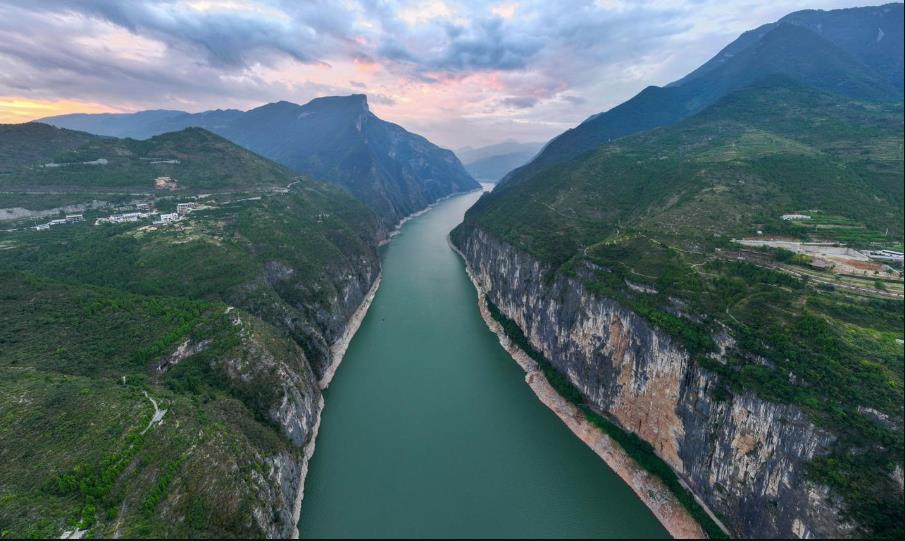
The Yangtze River Three Gorges is famed for its spectacular gorges, rushing river waters and grand water conservancy project. It is also a land steeped in profound history and culture. In my opinion, if you limit your Three Gorges trip only to river cruises and a visit to the Three Gorges Dam, you will miss countless fascinating stories.
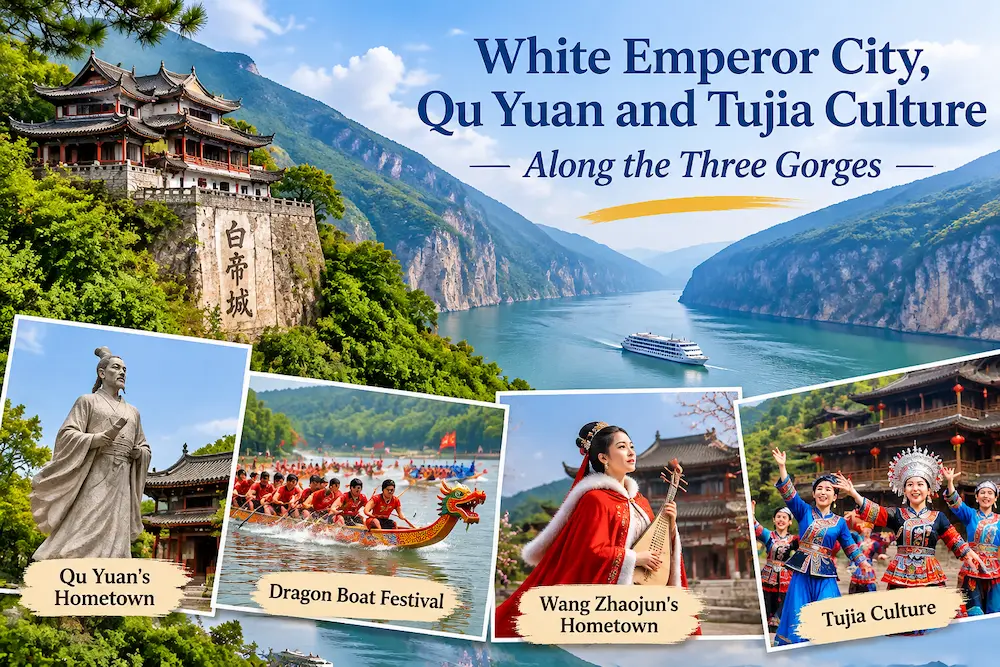
When travelling along the banks of the Yangtze, I love seeking out sites linked to historical figures, ancient poetry and local ethnic culture. From White Emperor City in Fengjie, Chongqing, to Qu Yuan’s Hometown in Zigui, Hubei, Wang Zhaojun’s Hometown in Xingshan, and Tujia villages in western Hubei’s mountain areas, these spots together form the rich humanistic landscape of the Three Gorges region.
If you are interested in Chinese history, literature and local culture, add these destinations to your Three Gorges travel itinerary.
1. White Emperor City: Step into Three Gorges History Through Li Bai’s Poem
1.1 Where is White Emperor City?
White Emperor City sits on Baidi Mountain at the entrance of Qutang Gorge in Fengjie County, Chongqing, near the western gateway of the Yangtze River Three Gorges. Backed by rolling mountains and facing the Yangtze River, it stands across the water from Baiyan Mountain. It is a prime spot to overlook the scenery of Kuimen and Qutang Gorge.
White Emperor City was originally named Ziyang City. At the end of the Western Han Dynasty, Gongsun Shu built a stronghold here and proclaimed himself the White Emperor, which gave the city its later name. Over subsequent dynasties, White Emperor City accumulated stories tied to the Three Kingdoms period, ancient battles and literati from all ages.
To me, the greatest charm of White Emperor City lies in how it blends historical relics with the natural scenery of the Three Gorges. Standing within the city and gazing afar, you can watch the Yangtze River winding through the gorges and sense its strategic importance as an ancient transportation hub on the Yangtze.
1.2 Li Bai’s Leaving White Emperor City at Dawn and the Three Gorges
Many foreign travellers may not know that White Emperor City is closely connected to one of China’s most celebrated ancient poems.
Li Bai, a poet of the Tang Dynasty, wrote Leaving White Emperor City at Dawn, a work familiar to generations of Chinese people:
At dawn I leave White Emperor City amid clouds so bright, A thousand li to Jiangling takes but one day’s flight. On both banks the apes cry without cease, My light boat has passed ten thousand mountains with ease.
The poem describes Li Bai’s journey downstream from White Emperor City toward Jiangling.
I especially love the final line “My light boat has passed ten thousand mountains with ease”. In just a few words, it captures the interplay of river currents, steep gorges and boats on the Yangtze. Even today, as tourists cruise through the Three Gorges, the towering cliffs on both banks still evoke the scene depicted in the verse.
White Emperor City is therefore known as the “City of Poetry”. Literary masters including Li Bai, Du Fu and Bai Juyi all left poems and writings in this region. Today, White Emperor City and Qutang Gorge together form a key natural and cultural scenic zone.
1.3 What to See at White Emperor City?
When visiting White Emperor City, I suggest you look beyond photographing Kuimen and explore its historical buildings and cultural relics.
- Baidi Temple: Learn the history of White Emperor City and tales of Gongsun Shu, Liu Bei, Zhuge Liang and other historical figures.
- Ancient buildings and stone inscriptions: Trace the cultural marks left by generations of literati in the Three Gorges.
- Kuimen scenery: Admire the dramatic cliffs and the Yangtze River from viewpoints near White Emperor City.
- Poetry culture: Understand how the ancients viewed the Three Gorges through works such as Leaving White Emperor City at Dawn.
White Emperor City is more than a historical attraction. It is a wonderful place for me to grasp the bond between classical Chinese poetry and Yangtze River culture.
2. Qu Yuan’s Hometown: Discover the Cultural Origins of China’s Dragon Boat Festival
2.1 Who was Qu Yuan?
Qu Yuan was a renowned poet and statesman of the State of Chu during China’s Warring States Period, living roughly from 340 BC to 278 BC. He is one of the most important writers in Chinese literary history.
Qu Yuan was born in what is now Zigui County, Yichang City, Hubei Province. He devoted himself to the politics and fate of the State of Chu, taking an active part in state affairs, before being ousted amid political conflicts.
Qu Yuan left behind masterpieces including Li Sao, Jiu Ge and Tian Wen. His poems carry immense literary value and express his devotion to his country, his ideals and his integrity.
For travellers eager to learn about traditional Chinese culture, Qu Yuan is a historical figure well worth knowing.
2.2 Where is Qu Yuan’s Hometown?
Qu Yuan’s Hometown is located in Zigui County, Yichang, Hubei, close to the Three Gorges Dam. It stands as a cultural symbol of his birthplace and preserves and displays many memories related to Qu Yuan.
Within the Qu Yuan’s Hometown Cultural Tourism Zone, visitors can learn about Qu Yuan’s life, his poems and local traditions. Qu Yuan Temple is one of its core cultural buildings.
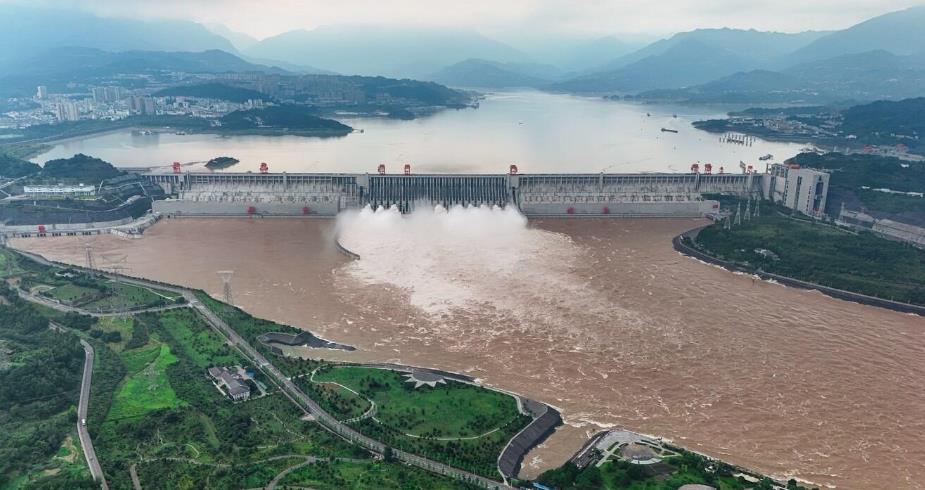
Due to the construction of the Three Gorges Project and rising water levels, some historical relics were relocated and protected. Visitors can now explore the new cultural exhibition area, while enjoying views of the Yangtze River and the Three Gorges Dam nearby.
I think this site pairs perfectly with a visit to the Three Gorges Dam on the same day. Rather than only admiring the scale of the engineering project from observation platforms, take extra time to learn about the people and stories of this land.
2.3 Qu Yuan and China’s Dragon Boat Festival
If you visit Zigui around the 5th day of the 5th lunar month, I highly recommend experiencing the local Dragon Boat Festival celebrations.
The Dragon Boat Festival is one of China’s major traditional festivals. According to the widely known legend, Qu Yuan drowned himself in the Miluo River after the fall of the State of Chu. Later generations formed customs such as dragon boat races and eating zongzi to honour him.
In Zigui, Qu Yuan’s Hometown gives the Dragon Boat Festival special meaning. Local dragon boat races and cultural events are held, and residents make and taste zongzi.
Zongzi are glutinous rice dumplings wrapped in bamboo or reed leaves. Different regions fill them with pork, beans, red dates and other ingredients.
To me, one of the best ways to understand Qu Yuan is to experience the Dragon Boat Festival in his hometown. What you witness is not just a performance, but how Chinese people commemorate a historical figure through age-old traditions.
3. Wang Zhaojun’s Hometown: Zhaojun in Ancient Chinese History
3.1 Who was Wang Zhaojun?
Wang Zhaojun is one of the most famous female figures in ancient Chinese history and one of the “Four Great Beauties” of traditional Chinese culture.
She lived during the Western Han Dynasty. Originally a palace maid in the Han imperial court, she later married the Xiongnu chieftain Huhanye Chanyu as a peace marriage envoy, becoming a vital figure for peaceful relations between the Han Dynasty and the Xiongnu.
Wang Zhaojun’s story has circulated in Chinese history, literature and art for over two thousand years. She is often regarded as a symbol of interethnic communication and peace.
3.2 Where is Wang Zhaojun’s Hometown?
Wang Zhaojun’s Hometown is in Xingshan County, Yichang, Hubei. Nestled in the mountainous western Hubei region, Xingshan features valleys, rivers and rural landscapes and is the cultural birthplace of Wang Zhaojun.
Its natural setting differs from downtown Yichang and the areas around the Three Gorges Dam. Mountains, streams and traditional villages create a distinctive mountain landscape.
If you are interested in historical women of ancient China, you can add Wang Zhaojun’s Hometown to your cultural itinerary around Yichang.
Learning about Wang Zhaojun’s story helps foreign travellers better understand ancient exchanges between different ethnic groups in China. Her experience is more than a personal legend; it reflects the political and cultural ties between the Han Dynasty and northern nomadic peoples.
3.3 Wang Zhaojun and Interethnic Communication
Stories of Wang Zhaojun’s journey north have been retold endlessly in literary works and folk legends across later centuries.
In traditional Chinese culture, she is often associated with peace, cross-border marriage and ethnic unity. Countless poems, operas and paintings take her as their theme.
When visiting Wang Zhaojun’s Hometown, I suggest focusing on the historical context instead of only the legend of the “Four Great Beauties”. This makes it easier to grasp her significance in Chinese history and culture.
4. Tujia Culture: Experience Traditional Folk Customs of the Three Gorges Mountains
4.1 Where do the Tujia people mainly live?
The Tujia are an ancient ethnic minority in China. They mainly reside in the Wuling Mountains, at the junction of Hubei, Hunan, Chongqing and Guizhou.
In Hubei, the Tujia population is concentrated in western Hubei, especially the Enshi Tujia and Miao Autonomous Prefecture. Alternating mountains and river valleys shape this unique natural environment and nurture a rich ethnic culture.
It should be noted that Tujia culture is not limited to downtown Yichang or the vicinity of the Three Gorges Dam. It spreads across the broader mountainous zone of western Hubei. If you wish to dive deep into Tujia folk customs, consider extending your Three Gorges trip to Enshi and surrounding areas.
4.2 Baishou Dance: The Traditional Dance of the Tujia
Baishou Dance is one of the most representative traditional dances of the Tujia people.
Linked to ancestor worship, sacrificial rituals, farming and daily life, the dance is performed to the beat of drums and folk songs. Dancers swing their arms, turn and step in rhythm, with highly distinctive ethnic movements.
During traditional festivals, villagers gather in ethnic costumes to perform Baishou Dance. For visitors, it is more than a show; it is a window into Tujia history and collective culture.
4.3 Tujia Traditional Architecture: Diaojiaolou Stilt Houses
When you travel into traditional villages in western Hubei’s mountains, you may spot a unique type of building: the diaojiaolou, or stilt house.
Diaojiaolou are built along mountain slopes, with parts of the structure supported by wooden pillars to adapt to steep terrain. Their layout, materials and construction methods embody the wisdom of local residents who have adapted to mountain living for generations.
I love how these buildings blend naturally with their surroundings. Unlike uniform high-rise buildings in modern cities, they take shape according to the mountain terrain and family living needs.
4.4 Tujia Cuisine and Traditional Festivals
When exploring local culture, I never skip regional food. Tujia lands have many distinctive dishes and dining traditions.
- Cured bacon: Smoked and preserved meat, a staple traditional ingredient in western Hubei mountains.
- Hezha: A local specialty mainly made from soybeans, with regional variations in preparation.
- Tujia oil tea soup: A famous traditional drink popular among the Tujia.
- Sheba Festival: A major Tujia festival featuring sacrificial ceremonies, song and dance, and communal celebrations.
Customs and food vary from village to village. If you get the chance to join a local festival, respectfully watch performances, taste local food and chat with residents.
5. How to Include These Cultural Sites in Your Three Gorges Itinerary
If your main destinations are the Three Gorges Dam and Yichang, arrange your route based on geography instead of rushing back and forth for quick check-ins.
5.1 Cultural Route Around Yichang
Day 1: Yichang Downtown → Zigui → Qu Yuan’s Hometown → Three Gorges Dam This route suits travellers who want to learn about Qu Yuan culture while visiting the Three Gorges Dam. Qu Yuan’s Hometown sits close to the dam, so both can be visited in one day.
5.2 Western Three Gorges Historical Cultural Route
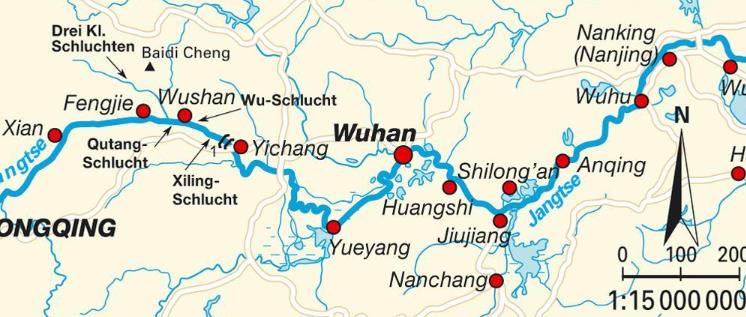
Day 2 or extended trip: Fengjie → White Emperor City → Qutang Gorge White Emperor City is in Fengjie, Chongqing, not near Yichang. If your Three Gorges tour covers both Chongqing and Yichang, place it in the western section of the Yangtze Three Gorges route.
Here you can learn the background of Leaving White Emperor City at Dawn, enjoy the views of Kuimen and visit Baidi Temple and other relics.
5.3 Xingshan and Western Hubei Mountain Cultural Route
If you have extra time, travel from Yichang to Xingshan to visit Wang Zhaojun’s Hometown. For deeper Tujia cultural experiences, continue onward to Enshi and surrounding mountain areas.
This section is best for travellers interested in Chinese ethnic culture, traditional architecture and rural life. It does not need to be squeezed into a one-day Three Gorges Dam tour.
6. Things I Keep in Mind When Visiting Three Gorges Cultural Sites
6.1 Do not treat all these sites as one single destination
White Emperor City is in Fengjie, Chongqing; Qu Yuan’s Hometown is in Zigui, Hubei; Wang Zhaojun’s Hometown is in Xingshan, Hubei; and Tujia culture is mainly found across western Hubei and neighbouring mountains.
All are connected to the history and culture of the Three Gorges, yet they are separated by considerable distances. When planning your trip, confirm the city and transport options for each attraction in advance.
6.2 Check the schedule of festival events
If you want to watch dragon boat races during the Dragon Boat Festival, look up Zigui’s festival arrangements. If you hope to see Baishou Dance and other Tujia folk performances, check event schedules for villages around Enshi.
Many activities only run during specific festivals or tourist seasons and are not available daily.
6.3 Set aside enough time for historical cultural sites
I do not recommend rushing through White Emperor City, Qu Yuan’s Hometown and Wang Zhaojun’s Hometown just for quick photos.
The true charm of these sites lies in learning their stories, historical backgrounds and local culture. If time permits, book a local guide to explain the history, or read background materials ahead of your trip.
Standing beside the Yangtze, thinking of Li Bai sailing downstream from White Emperor City, of Qu Yuan’s poems still recited by Chinese people today, and of Wang Zhaojun’s stories passed down among different ethnic groups, you will realise the Three Gorges is far more than a magnificent natural canyon. It is a Yangtze River corridor carrying China’s historical and cultural memories.