
On October 8, the Three Gorges Maritime Safety Administration issued an official notice. Starting October 10, 2026, cofferdam construction for upstream and downstream sections kicked off for the Gezhouba Shipping Capacity Expansion Project. After 45 years of navigation service, the landmark “First Dam on the Yangtze River” enters its substantial reconstruction phase, launching the long-awaited shipping expansion.
As a supporting project for the Three Gorges Water Transport New Channel, this project has a total investment of 27.9 billion yuan and a total construction period of 83 months. Upon completion, the Gezhouba Water Control Project will upgrade from a three-line to four-line ship lock system.
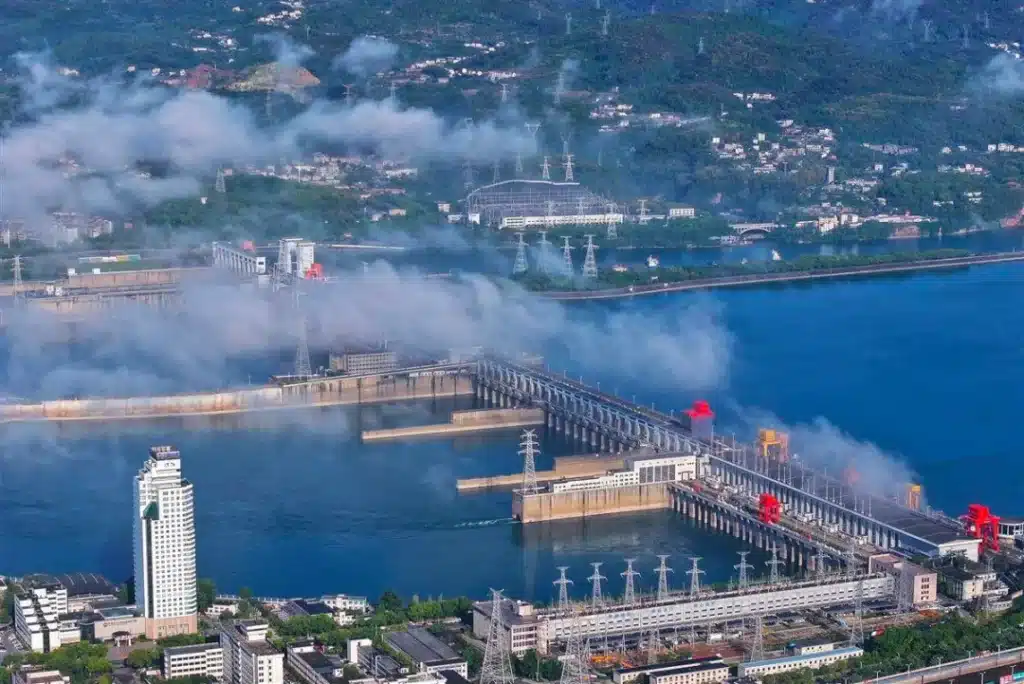
Gezhouba once consigned the notorious ancient river hazard to history: the old saying “Xietan and Qingtan shoals are nothing; Kongling is the Gate of Hell” no longer applies. Now, this iconic dam is undertaking a high-stakes engineering feat on the world’s busiest inland golden waterway: expanding the main Sanjiang waterway without halting navigation.
01 Overloaded: Annual cargo throughput hits 178 million tonnes
Gezhouba sits 2.3 km downstream of Nanjin Pass at the exit of Xiling Gorge, integrated with urban Yichang in Hubei Province. It serves as a core navigation hub for the upper and middle Yangtze River.
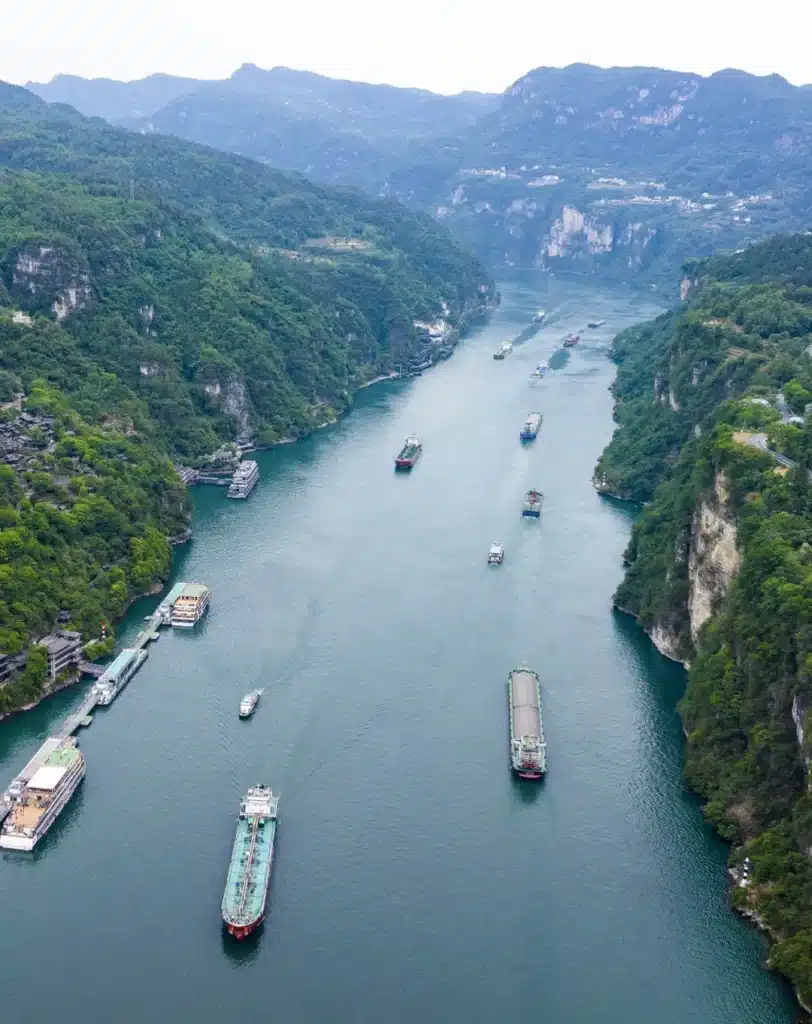
Since ancient times, the 660-kilometer Chuanjiang waterway from Chongqing to Yichang cuts through steep mountain canyons. It was notorious for raging rapids, submerged reefs, and extremely high risks for night navigation.
On December 30, 1970, construction of the Gezhouba Project began at the mouth of Xiling Gorge. The full project spanned roughly 18 years and was fully completed in December 1988.
After Gezhouba was built, water levels along the Three Gorges stretch rose. Thirty hazardous shoals including Qingtan, Xietan and Konglingtan, plus 11 one-way controlled navigation channels, were submerged and eliminated.
Even before the dam was fully finished, the Dongfanghong passenger liner blew its horn on June 27, 1981, marking the opening of Gezhouba’s ship locks. Back then, annual cargo throughput was less than 4 million tonnes.
The volume first exceeded 100 million tonnes in 2011. In 2025, cargo passing through Gezhouba ship locks reached 178 million tonnes.
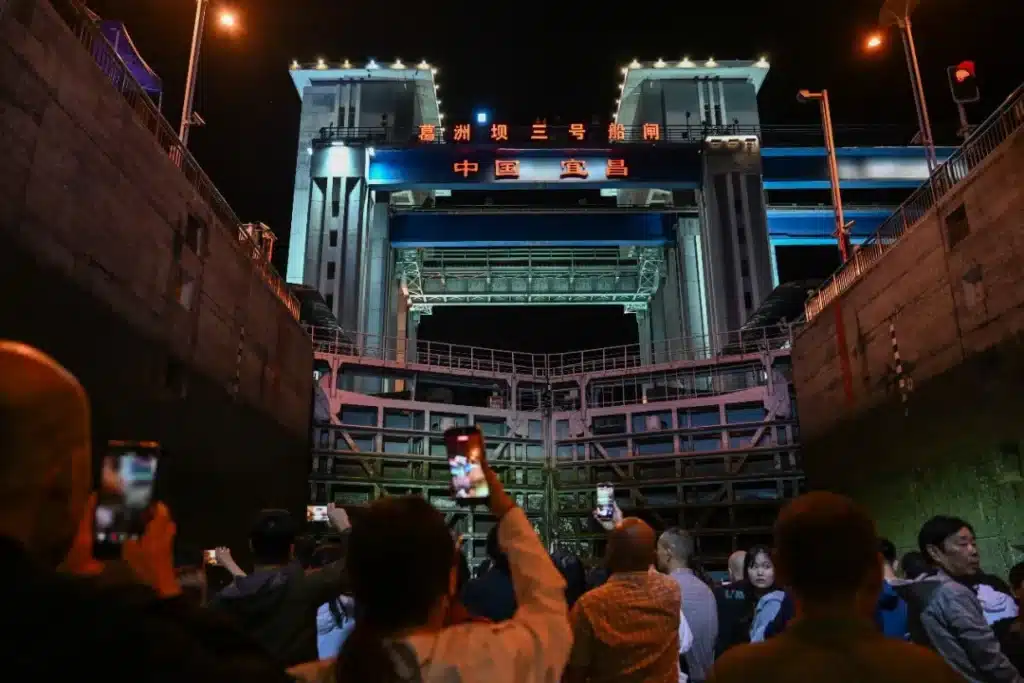
Shipping demand keeps surging while the hub’s capacity has hit its ceiling.
Latest data from the Yangtze Three Gorges Navigation Authority shows that in the first three quarters of 2026, cumulative throughput at Gezhouba ship locks reached 126 million tonnes. Heavy-load operation has become standard.
Over the same period, Gezhouba safely handled 1.492 million passengers, 344.92 million tonnes of daily supplies, and 236.89 million tonnes of priority cargo.
After 45 years of service, the “First Yangtze Ship Lock” has hit its operational ceiling. Yet demand continues to climb.
Academician Niu Xinqiang of the Chinese Academy of Engineering explained that feasibility studies project the freight demand through Three Gorges ship locks will hit 220 million tonnes by 2035 and 250 million tonnes by 2050.
More vessels and larger cargo volumes are worsening the bottleneck. Shipping expansion has become urgent.
02 Why Gezhouba Must Be Upgraded Alongside Three Gorges Expansion
Thirty-eight kilometers upstream from Gezhouba lies the Three Gorges Dam.
On June 8, the Three Gorges Water Transport New Channel, the first landmark national mega project under China’s 15th Five-Year Plan, broke ground in Yichang, Hubei.
As the largest comprehensive water conservancy, shipping and ecological project on the Yangtze mainstem after the Three Gorges Project, this new waterway is the key to boosting the efficiency of the Yangtze Golden Waterway. It carries far-reaching significance for national coordinated regional development and high-quality growth of the Yangtze River Economic Belt.
The static total investment of the Three Gorges Water Transport New Channel stands at approximately 77.208 billion yuan. It contains two components: the Three Gorges Hub New Channel and the Gezhouba Shipping Expansion Project. The Three Gorges Hub New Channel has a 112-month construction schedule (including a 12-month preparation phase), while Gezhouba’s shipping expansion takes 95 months (also including 12 months of preparation).
The Three Gorges Hub New Channel will excavate a new waterway deep into the left bank mountain without disrupting the existing Three Gorges layout, constructing new dual-track, five consecutive ship locks. Once finished, the Three Gorges Hub will operate four ship lock lines plus a ship lift. Gezhouba will also adopt a four-line ship lock layout after its upgrade.
Why must Gezhouba be upgraded together with the Three Gorges expansion?
Vessels passing through the upstream Three Gorges ship locks must travel downstream via Gezhouba. Fixing only the Three Gorges locks would be a partial, ineffective solution.
Gezhouba’s existing No.3 lock chamber is merely 120 m long and 18 m wide, only accommodating vessels up to 3,000 dwt. Today, mainstream cargo ships on the Yangtze mainstem are 5,000 dwt. Once the Three Gorges New Waterway opens, 10,000 dwt vessels will become the primary traffic. At that point, Gezhouba’s scheduling capacity cannot match the new demand.
The approved plan calls for reconstruction and expansion of the existing No.3 lock at Gezhouba. Two new single-stage ship locks will be built, paired with dredging and widening of upstream and downstream main channels.
The new Gezhouba lock chambers measure 280 m long, 40 m wide, with a minimum sill depth of 8 meters — identical in dimension to the locks of the Three Gorges Hub New Channel. Designed for 10,000 dwt vessels, they fully match the navigation standards of the new Three Gorges waterway.
After reconstruction, Gezhouba will combine the original No.1 and No.2 locks with the two new 10,000-tonne locks to operate four lines in coordination. The four-lock system will deliver an annual two-way throughput capacity of 360 million tonnes, offering a more rational navigation layout and ample capacity reserve.
Meanwhile, the Three Gorges Hub will have four ship-lock lines plus a ship lift, with an annual two-way throughput capacity of 336 million tonnes.
03 Nearly 10 Design Options Abandoned for One Fish
Downstream of Gezhouba lies the core zone of the Yichang Chinese Sturgeon National Nature Reserve on the Yangtze — critical habitat for national key protected aquatic species including the Chinese sturgeon (Acipenser sinensis) and Yangtze finless porpoise.
Ecological protection was the top priority during plan selection for the Gezhouba Shipping Expansion Project.
Xie Liming, Senior Engineer at Changjiang Institute of Survey, Planning, Design and Research, stated that the project team evaluated nearly 10 alternative routes during demonstration. The team finally selected the renovation scheme for the No.3 lock on the left bank of Sanjiang Channel.
The right-bank route was rejected for one core reason: its proximity to the core Chinese sturgeon reserve would risk disturbing the habitat of these rare aquatic creatures.
After rigorous assessment, the project decided to reuse existing land within the Gezhouba hub for in-situ reconstruction, building two brand-new 10,000-tonne ship locks. This 27.9-billion-yuan mega project was finalized accordingly.
“The project puts ecology first from its very source,” said Academician Niu Xinqiang of the Chinese Academy of Engineering. During construction, Gezhouba Shipping Expansion will deploy a full set of dual “engineering + ecological” protection measures.
To stop aquatic wildlife from accidentally entering the construction zone, an intelligent finless porpoise protection system will be installed at the entrance of the Sanjiang waterway. With a 1,500-meter monitoring radius, the system detects porpoises via echolocation, pinpoints their position and emits warning audio to drive them away.
During the annual Chinese sturgeon spawning season, staggered navigation scheduling will be enforced at Gezhouba. Vessels will be guided to use the new locks and the existing No.2 lock, reducing vessel disturbances from No.1 lock to the spawning grounds.
The expansion project will also test innovative fish-friendly ship lock technology and build new ecological fish passages at Gezhouba. These passages reconnect fish migration routes and mitigate the historic barrier effect of high dams on aquatic species.
04 Non-Stop Construction on the World’s Busiest Golden Waterway
Gezhouba Water Control Project is a vital node of the Yangtze Golden Waterway. Its main Sanjiang channel is currently 120 m wide and 4.5 m deep. To safely accommodate 10,000 dwt ships, it must be widened to 160 m and deepened to 7.5 m.
How to rebuild this “highway for ships” while keeping traffic flowing?
The solution: staged, alternate-side construction.
Work proceeds alternately. One side of No.3 lock is constructed while No.2 lock remains open for navigation — half the channel works under construction while the other half carries one-way vessel traffic. Once new locks are finished, No.2 lock will temporarily close to complete the remaining deep dredging work.
In March 2026, Gezhouba No.2 lock underwent its largest scheduled overhaul in recent years, with related facilities upgraded in advance. This ensures No.2 lock can stay operational throughout most of the expansion phase before new locks open.
No.1 lock will also maintain normal navigation to preserve the baseline capacity of Yangtze shipping.
Wang Lei, specialist from the Gezhouba Expansion Management Department of the Three Gorges New Channel Company, explained cofferdam construction will start first before main works. Cofferdam work will kick off this October and wrap in early May next year, lasting roughly six months.
There are two cofferdams: upstream and downstream. The upstream cofferdam works jointly with the dam for water retention. The downstream cofferdam consists of concrete structures plus double-row steel pipe piles and will remain in service for five years.
Sun Zhifeng, Senior Specialist and Director of Gezhouba Expansion Management Department, highlighted technical challenges. The upstream cofferdam relies on deep-water dumping filling, while the downstream cofferdam uses high water-retaining construction with steel pipe piles. No national construction standards yet exist for this high water-retaining steel pipe pile technique, requiring dedicated research to guarantee safety.
Fifty-six years ago, construction of Gezhouba broke ground at Xiling Gorge’s mouth. Hundreds of thousands of builders flocked to the wild canyon from across China. Back then, China’s total economic output stood at merely over 200 billion yuan, and no port on the Yangtze handled 100 million tonnes annually.
Today, 56 years later, China’s GDP exceeds 140 trillion yuan. The Yangtze has grown into the world’s busiest inland waterway. The 11 provinces and municipalities along the Yangtze River Economic Belt contribute nearly half of China’s total GDP. What the Yangtze transports is not just cargo — it carries the future of China’s economy.
In 2025, cargo throughput at ports along the Yangtze mainstem hit roughly 4.2 billion tonnes, surpassing 80% of China’s total railway freight volume. Transport authorities calculated the cost gap between water, rail and road transport: measured in yuan per tonne-kilometer, waterway costs are cents, rail costs are tens of cents, and road costs are yuan.
“Take container transport from Chongqing to Shanghai for example. Rail freight costs 0.15 yuan per tonne-km, road 0.45 yuan per tonne-km, while water transport is only 0.03 yuan per tonne-km,” said Academician Zhang Chaoran of the Chinese Academy of Engineering.
The cascade coordination of Gezhouba and Three Gorges dams will allow regular 10,000 dwt vessel voyages all the way to Chongqing and drastically cut waiting times for locks, unlocking greater “golden benefits” of the Yangtze Golden Waterway. Preliminary estimates show roughly 18 billion yuan in annual savings from higher navigation efficiency and reduced land transport reliance.
“Unclogging this single bottleneck at the Three Gorges hub will open the full Yangtze channel and boost the whole Yangtze river basin,” commented Su Fengming, researcher at the Comprehensive Transport Institute, Academy of Macroeconomic Research, NDRC. The new waterway will link the Chengdu-Chongqing economic circle, the Middle Yangtze urban cluster and the Yangtze River Delta integration strategy. It also connects the Yangtze Economic Belt with the Belt and Road Initiative and the New International Land-Sea Trade Corridor, enabling coordinated east-west, north-south and land-sea development across the basin.
