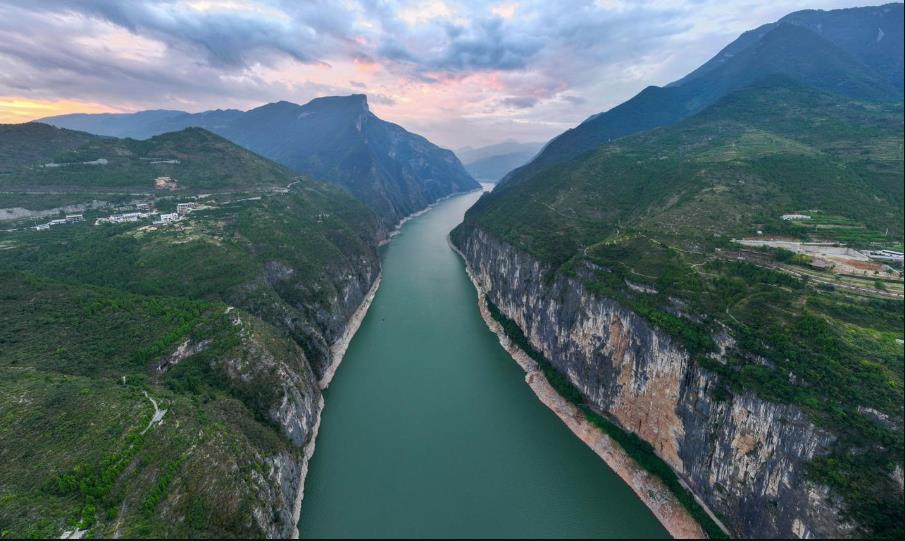
When I think about China’s most impressive engineering achievements, the Three Gorges Dam is one of the first places that comes to mind. Built across the Yangtze River in central China, this enormous hydroelectric project is famous for its massive concrete structure, powerful generating capacity, and remarkable navigation facilities.
Located near Yichang in Hubei Province, the Three Gorges Dam attracts visitors from around the world who want to see one of the largest water conservancy projects ever built. Some come to understand its engineering achievements, while others are interested in the spectacular scenery of the Yangtze River and the surrounding Three Gorges region.
But what exactly is the Three Gorges Dam? Where is it located? How large is it? Can visitors see the dam up close? And how do the famous five-stage ship locks and vertical ship lift work?
In this guide, I will take you through everything you need to know about China’s Three Gorges Dam, including its location, engineering scale, main facilities, sightseeing areas, transportation, and ticket information.
1. What Is the Three Gorges Dam?
The Three Gorges Dam is a massive concrete gravity dam built across the Yangtze River in Hubei Province, central China.
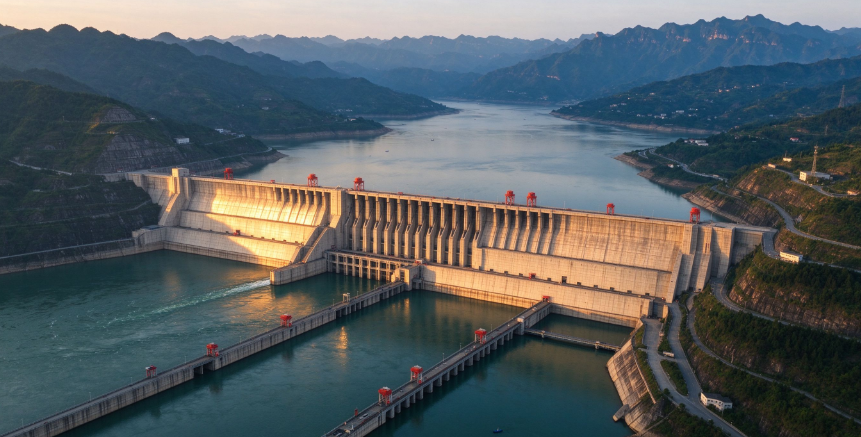
It is the central structure of the Three Gorges Project, a comprehensive water conservancy and hydropower development project designed to provide several major benefits, including:
- Hydroelectric power generation
- Flood control along the Yangtze River
- Improved inland water transportation
- Water resource management
- Support for regional economic development
The project is particularly famous for its enormous hydroelectric generating capacity. With a total installed capacity of approximately 22,500 megawatts, it is the world’s largest hydropower station by installed capacity.
What makes the Three Gorges Dam especially interesting to me is that it is not simply a barrier across a river. It is an integrated engineering system combining a dam, power stations, navigation locks, a ship lift, and a huge reservoir.
Construction officially began in December 1994. The project gradually entered operation in stages, with initial power generation and navigation facilities becoming operational in 2003. The main construction phase was completed in 2009.
Today, the Three Gorges Dam is both a major infrastructure project and one of China’s best-known engineering attractions.
2. Where Is the Three Gorges Dam Located in China?
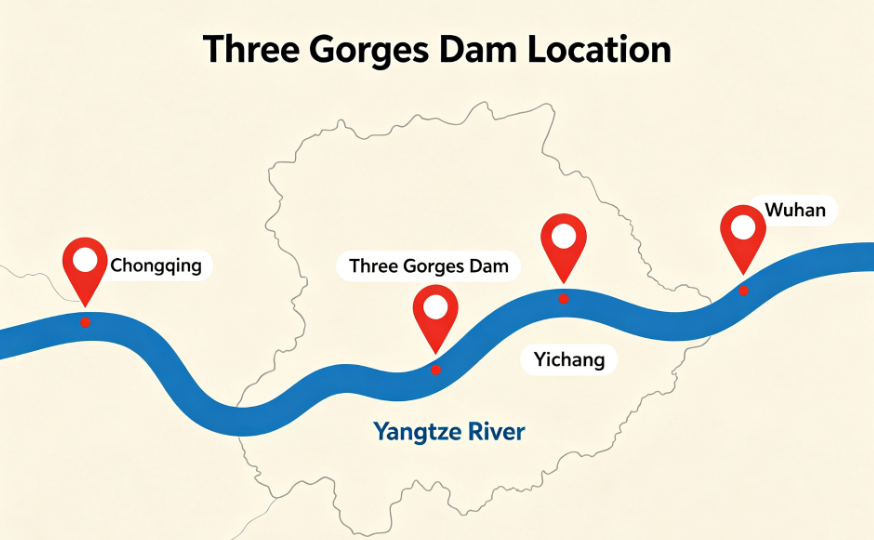
The Three Gorges Dam is located in Sandouping Town, Yiling District, Yichang City, Hubei Province, China.
It stands on the Yangtze River, near the western end of the Xiling Gorge, which is one of the famous Three Gorges of the Yangtze.
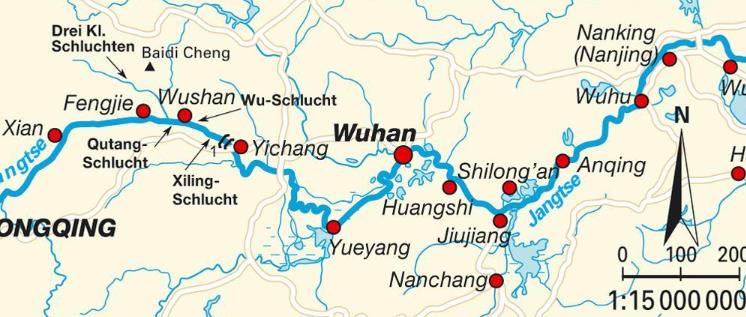
For international visitors, the easiest way to understand its location is to look at its relationship with several major Chinese cities.
- Yichang: The nearest major city, approximately 40–50 km from the dam area, depending on the starting point and route.
- Wuhan: The capital of Hubei Province, approximately 300 km east of Yichang.
- Chongqing: An important upstream city on the Yangtze River, located several hundred kilometers west of the dam.
- Shanghai: A major coastal city farther downstream along the Yangtze River.
Yichang is generally the most convenient starting point for visiting the Three Gorges Dam.
2.1 The Three Gorges Dam and the Yangtze River
The Yangtze River is the longest river in China, stretching approximately 6,300 kilometers from the Tibetan Plateau to the East China Sea.
The Three Gorges Dam was built along a strategically important section of the river, where the surrounding mountains create favorable geographical conditions for a large reservoir and hydropower development.
After construction, the dam created the Three Gorges Reservoir, extending upstream through the mountainous river valley.
The reservoir changed the landscape of the region, transforming sections of the former narrow river channel into a much wider body of water.
2.2 Why Was This Location Chosen?
The Three Gorges region has several geographical characteristics that make it suitable for a large hydropower project.
The river passes through mountainous terrain, creating a significant difference in elevation between upstream and downstream water levels.
This provides favorable conditions for generating hydroelectric power.
The region also lies along an important transportation route connecting western and central China with the eastern coastal areas.
By building the dam here, engineers could combine power generation, flood management, and improvements to inland navigation within one major project.
3. How Big Is the Three Gorges Dam?
One of the first things visitors notice when they see the Three Gorges Dam is its enormous scale.
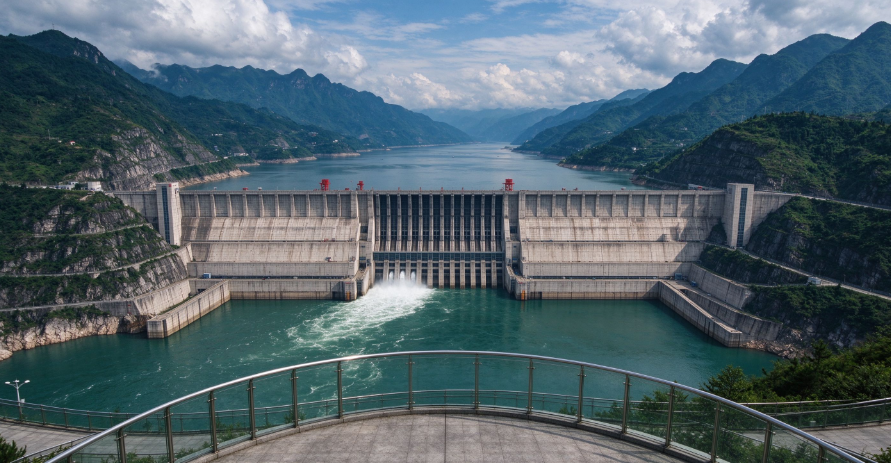
It is difficult to fully appreciate the size of this structure through photographs alone. Standing at one of the observation platforms, I can better understand why it is considered one of the most remarkable engineering projects in the world.
Here are some important figures about the Three Gorges Dam:
| Feature | Specification |
|---|---|
| Dam type | Concrete gravity dam |
| Dam axis length | Approximately 2,309 meters |
| Maximum dam height | 181 meters |
| Dam crest elevation | 185 meters |
| Normal reservoir water level | 175 meters |
| Reservoir capacity | Approximately 39.3 billion cubic meters |
| Installed generating capacity | 22,500 MW |
| Number of generating units | 34 |
| Main river | Yangtze River |
| Location | Yichang, Hubei Province, China |
| Construction began | 1994 |
| Main construction completed | 2009 |
3.1 The Dam Structure
The Three Gorges Dam is a concrete gravity dam.
This type of dam uses its enormous weight to resist the pressure exerted by the water behind it.
With an axis length of approximately 2,309 meters and a maximum height of 181 meters, the structure spans a substantial section of the Yangtze River.
Its main components include:
- Concrete dam body
- Spillway structures
- Hydropower stations
- Navigation facilities
- Supporting infrastructure
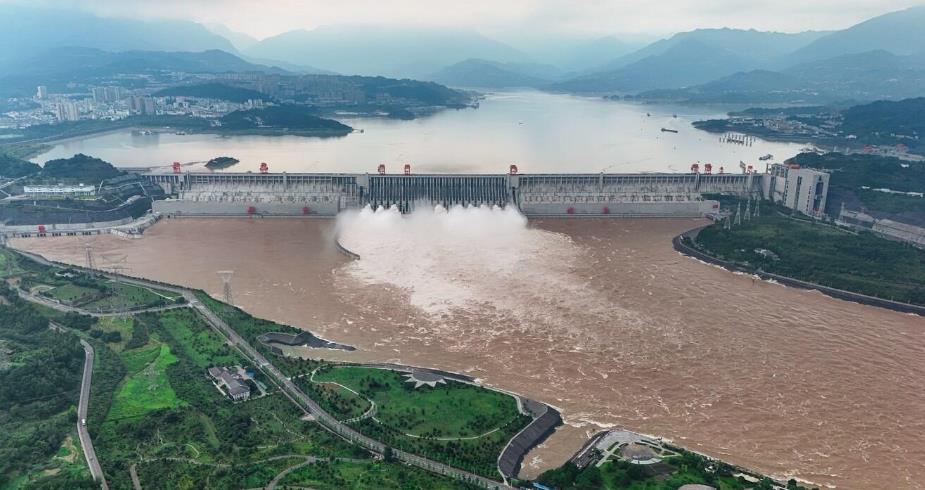
The spillway section is particularly important because it allows excess water to be discharged safely during periods of high river flow.
3.2 The Three Gorges Reservoir
The Three Gorges Reservoir is one of the most impressive features of the entire project.
At its normal operating water level of 175 meters, the reservoir has a total storage capacity of approximately 39.3 billion cubic meters.
The reservoir extends upstream through the Yangtze River valley, creating an extensive water landscape surrounded by mountains.
From a visitor’s perspective, one of the most interesting contrasts is the difference between the relatively calm reservoir upstream and the river downstream of the dam.
This contrast becomes especially noticeable when viewing the project from the 185 Observation Platform.
3.3 Hydroelectric Power Generation
The Three Gorges Dam is primarily famous for its enormous hydropower capacity.
Its power station has a total installed capacity of approximately 22,500 MW, consisting of 32 main generating units rated at 700 MW each and two smaller units rated at 50 MW each.
Water from the reservoir flows through the turbines, causing them to rotate and drive electrical generators.
The electricity is then transmitted through China’s power grid to major cities and industrial regions.
The project plays an important role in China’s renewable electricity production and energy infrastructure.
4. How Does the Three Gorges Dam Work?
To understand the Three Gorges Dam, I think it helps to look at its three main functions: controlling water flow, generating electricity, and allowing ships to pass through the dam.
These functions are closely connected but rely on different engineering structures.
4.1 Flood Control
Flood control was one of the major reasons behind the construction of the Three Gorges Project.
The Yangtze River basin receives substantial rainfall, especially during the summer flood season.
Heavy rainfall can cause water levels to rise rapidly, creating serious flood risks for downstream cities, farmland, and communities.
The Three Gorges Reservoir provides storage capacity that can temporarily hold excess water during flood periods.
By controlling the release of water, the dam helps reduce flood pressure on important downstream sections of the Yangtze River.
Its flood-control storage capacity is approximately 22.15 billion cubic meters.
4.2 Hydroelectricity Generation
The second major function is generating electricity.
Water stored in the reservoir passes through large turbines installed in the powerhouses.
As the turbines rotate, generators convert mechanical energy into electrical energy.
The Three Gorges hydropower station has a total installed capacity of approximately 22,500 MW.
This makes it one of the world’s largest electricity-generating facilities of its kind.
Another important function is improving navigation along the Yangtze River.
Before the dam was built, the river’s natural conditions in the Three Gorges region made navigation difficult for larger vessels.
The dam changed the water conditions upstream and introduced specialized navigation facilities to allow ships to pass between different water levels.
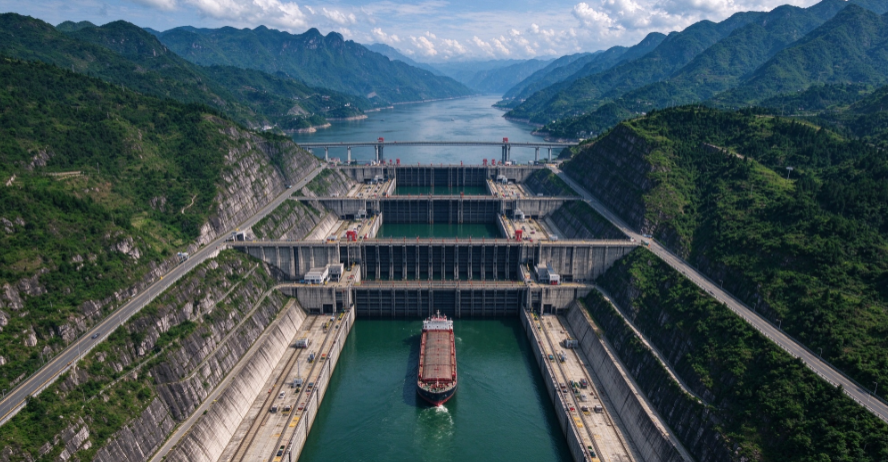
These facilities include the famous double-line five-stage ship lock and the vertical ship lift.
Both are essential parts of the Three Gorges Dam navigation system.
5. The Five-Stage Ship Lock: How Do Ships Pass Through the Dam?
One of the most fascinating parts of the Three Gorges Dam is its double-line five-stage ship lock.
When I first learned how this system worked, I found it almost as impressive as the dam itself.
Unlike a road bridge or tunnel, ships cannot simply travel through the dam. They need to move between two different water levels.
The five-stage ship lock solves this problem through a sequence of connected chambers.
5.1 What Is a Five-Stage Ship Lock?
A ship lock is a water-filled chamber with gates at both ends.
Ships enter the chamber, and the gates close behind them. Water is then added or released to raise or lower the water level until it matches the next section of the river.
The gates open again, allowing the ship to move into the next chamber.
At the Three Gorges Dam, this process happens through five consecutive stages.
The system has two parallel navigation lines, allowing vessels to travel in both directions.
5.2 How Long Does It Take for a Ship to Pass Through?
Passing through the five-stage ship lock takes significantly longer than using a conventional single-stage lock.
A complete passage generally takes several hours, depending on operating conditions, vessel arrangements, and traffic.
The system was designed with an annual one-way navigation capacity of approximately 50 million tonnes.
Each lock chamber is approximately 280 meters long and 34 meters wide.
These dimensions allow the system to accommodate large commercial vessels and fleets of barges.
5.3 Can Visitors See the Ship Locks?
Yes.
The five-stage ship locks are among the most interesting structures to observe when visiting the Three Gorges Dam.
The lock system is visible from designated sightseeing platforms, where visitors can see the large chambers, gates, and surrounding infrastructure.
Watching a ship move through the different stages is a memorable way to understand how the dam manages navigation on the Yangtze River.
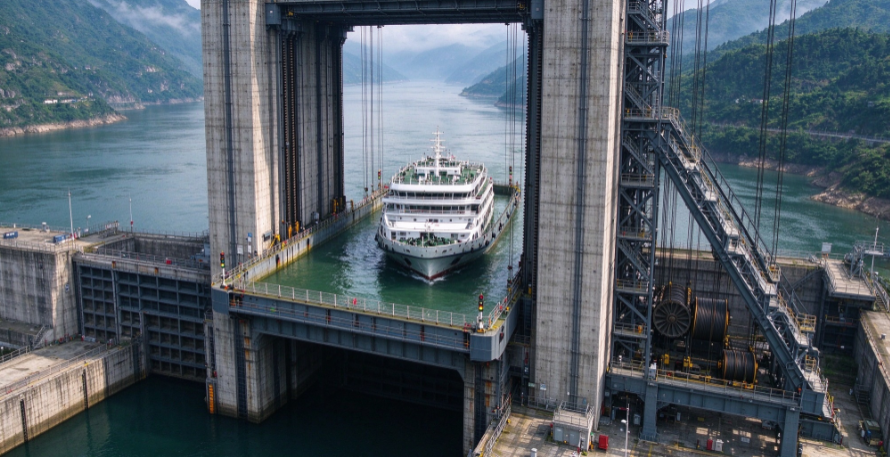
6. The Three Gorges Ship Lift: The World’s Largest Ship Elevator
If the five-stage ship lock is impressive, the Three Gorges ship lift is even more unusual.
Imagine an elevator large enough to carry an entire ship.
That is essentially how the vertical ship lift works.
The Three Gorges ship lift is one of the most remarkable navigation facilities at the dam and is recognized as the world’s largest ship lift by lifting height and carrying capacity.
6.1 How Does the Ship Lift Work?
Unlike a traditional ship lock, which uses several chambers to gradually change the water level, the ship lift raises or lowers a vessel vertically inside a large water-filled chamber.
The ship enters the chamber, which contains enough water to support the vessel.
The entire chamber then moves vertically, carrying the ship between the upstream reservoir and downstream river.
Once the chamber reaches the required water level, the gates open and the vessel continues its journey.
The system uses a sophisticated mechanical lifting structure with counterweights and a rack-and-pinion mechanism.
6.2 Key Specifications of the Three Gorges Ship Lift
Some of its most impressive specifications include:
- Maximum lifting height: 113 meters
- Maximum vessel carrying capacity: 3,000 tonnes
- Ship chamber usable length: Approximately 120 meters
- Clear chamber width: Approximately 18 meters
- Approximate transit time: 40 minutes
The lift allows eligible passenger and cargo vessels to pass through the dam much faster than the traditional ship lock system.
6.3 Five-Stage Ship Lock vs. Ship Lift
Although both facilities help ships pass through the Three Gorges Dam, they operate in very different ways.
| Feature | Five-Stage Ship Lock | Vertical Ship Lift |
|---|---|---|
| Operating principle | Changes water level in stages | Lifts the ship vertically |
| Number of stages | Five | One vertical lift |
| Main advantage | Handles large volumes of commercial shipping | Faster passage for eligible vessels |
| Maximum ship capacity | Designed for large vessels and fleets | Up to 3,000 tonnes |
| Typical passage time | Several hours | Approximately 40 minutes |
I find this comparison particularly interesting because it shows how two different engineering solutions can work together to solve the same navigation challenge.
For visitors, however, it is important to understand that seeing the ship lift from an observation platform does not automatically mean you can ride on it. Ship-lift passage depends on vessel eligibility, operating arrangements, and available services.
7. How to Visit the Three Gorges Dam?
For travelers interested in visiting the Three Gorges Dam, Yichang is usually the best starting point.
The dam is not located inside the center of Yichang, so visitors need to arrange transportation to the designated tourist transfer center.
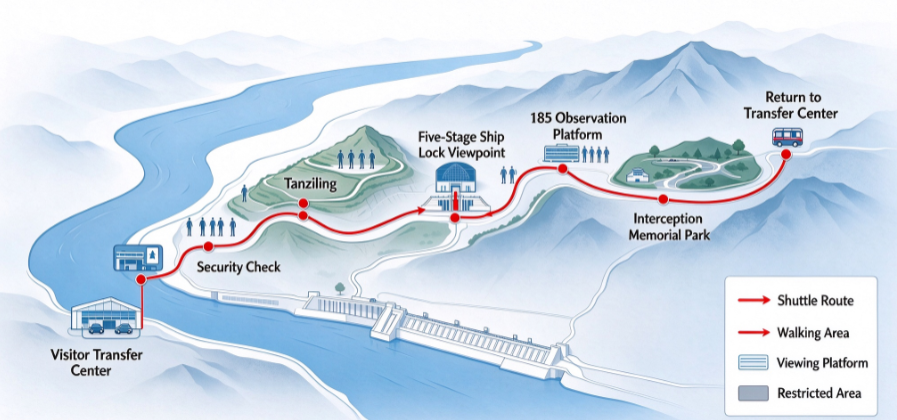
The sightseeing area is a controlled-access zone, and visitors generally follow an organized route using the area’s shuttle buses.
7.1 Visit from Yichang
Yichang is the nearest major city and offers convenient transportation connections.
You can reach the city by high-speed train, domestic flights, or long-distance transportation from other parts of China.
Yichang East Railway Station is an important arrival point for visitors coming from Wuhan, Chongqing, and other major cities.
From downtown Yichang, you can arrange a sightseeing bus, private tour, or other authorized transportation to the Three Gorges Dam Tourist Area.
Travel time varies depending on the departure point and traffic conditions.
7.2 Visit by Yangtze River Cruise
Another interesting way to experience the Three Gorges region is by taking a Yangtze River cruise.
Many cruises travel through the scenic Three Gorges section between Chongqing and Yichang.
Along the way, passengers can enjoy mountain scenery, river valleys, and other attractions along the Yangtze.
Some cruise itineraries include a shore excursion to the Three Gorges Dam.
This is a good option for travelers who want to combine the dam with a broader sightseeing experience along the Yangtze River.
However, I would recommend checking the specific cruise itinerary before booking, because not every cruise includes a visit to the dam.
7.3 Can You Visit the Dam Independently?
Yes, independent travelers can visit the Three Gorges Dam Tourist Area.
However, access is controlled, and visitors need to complete the required reservation and security procedures.
Private vehicles cannot simply enter the restricted dam management area without the necessary authorization.
For most international travelers, arranging transportation from Yichang and following the official sightseeing route is the simplest option.
8. What Can You See at the Three Gorges Dam Tourist Area?
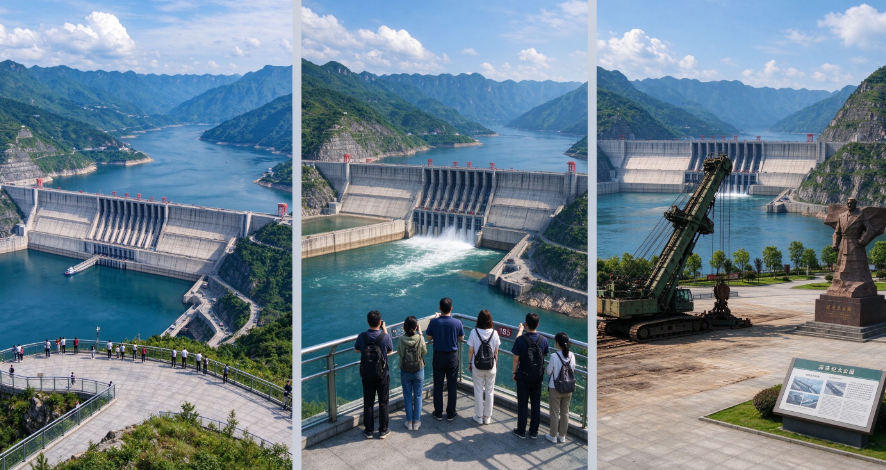
The Three Gorges Dam Tourist Area has several designated observation points.
Rather than allowing unrestricted access to the entire engineering complex, the scenic area organizes visitors through designated sightseeing locations.
The main attractions include Tanziling, the 185 Observation Platform, and the Interception Memorial Park.
8.1 Tanziling Observation Platform
Tanziling is one of the best places to get a panoramic view of the Three Gorges Dam.
The observation area is located at a relatively high elevation, providing a broad view of the dam structure, reservoir, ship locks, and surrounding mountains.
From here, visitors can better understand the overall layout of the Three Gorges Project.
For first-time visitors, I would make this one of the first stops.
8.2 The 185 Observation Platform
The 185 Observation Platform is named after the dam crest elevation of 185 meters.
It offers another perspective of the project, allowing visitors to view the dam and surrounding water from a relatively close distance.
One of the most interesting features is the contrast between the calm water of the reservoir and the river downstream.
Depending on visibility and operating conditions, visitors may also get a closer look at the ship lift structure.
8.3 Interception Memorial Park
The Interception Memorial Park is another important stop.
It commemorates the river diversion and closure operations during the construction of the Three Gorges Project.
The park displays construction-related equipment and historical materials that help visitors understand the challenges faced by the engineers and construction teams.
Compared with the panoramic views at Tanziling, this attraction provides more historical and educational context.
8.4 How Much Time Should You Spend?
I recommend allowing approximately half a day for a visit to the Three Gorges Dam Tourist Area.
A typical sightseeing route includes:
- Arriving at the visitor transfer center.
- Completing security checks and shuttle transfers.
- Visiting Tanziling.
- Viewing the five-stage ship locks.
- Visiting the 185 Observation Platform.
- Exploring the Interception Memorial Park, if included in your selected route.
- Returning to the visitor transfer center.
The exact route and duration depend on the sightseeing package and current operating arrangements.
9. Three Gorges Dam Tickets, Opening Hours, and Visitor Information
Before visiting, it is important to understand the ticket and reservation arrangements.
One detail that sometimes confuses international travelers is that the scenic area admission and internal sightseeing transportation are not necessarily the same thing.
9.1 How Much Are Three Gorges Dam Tickets?
The Three Gorges Dam Tourist Area has offered free admission, while internal sightseeing transportation requires a separate payment.
The commonly published sightseeing shuttle price is approximately RMB 35 per person for the standard route.
Some routes or additional services may have different charges.
For international travelers, I recommend checking the latest official announcement before visiting, rather than relying on old ticket prices from travel websites.
9.2 Do You Need to Make a Reservation?
Yes. The scenic area uses a real-name reservation system and access controls.
Visitors should arrange their reservations in advance through the official Three Gorges Dam tourism service account or authorized booking channels.
Foreign visitors who cannot complete the mainland Chinese ID-based online booking process may use their valid travel documents, such as a passport, to register at the designated ticket window, subject to the current visitor policy.
I would recommend bringing the same original passport used for reservation or registration.
9.3 Opening Hours
Opening hours vary by season and may change during public holidays or special operating periods.
The general published schedule has included:
- March 1 to December 15: 8:00 AM–5:00 PM.
- December 16 to February 28: 8:30 AM–4:30 PM.
These are reference schedules rather than guaranteed daily hours. Visitors should confirm the latest operating announcement before departure.
9.4 Important Things to Know Before Visiting
I would keep the following points in mind when planning a trip:
- Bring your original passport for identity verification.
- Make a reservation before arriving whenever possible.
- Allow enough time for security checks and internal shuttle transfers.
- Wear comfortable shoes because the sightseeing route involves walking.
- Check weather conditions before departure.
- Follow the designated sightseeing route and security instructions.
- Do not assume that the dam crest or restricted engineering areas are open to ordinary visitors.
For the latest information, you can consult the official Three Gorges Dam Tourist Area service channels or contact the visitor information center.
10. What Is the Best Time to Visit the Three Gorges Dam?
The Three Gorges Dam can be visited throughout the year, but the experience changes with the seasons.
Spring (March to May)
Spring is a pleasant time to explore the Three Gorges region.
Temperatures are generally comfortable, and the surrounding mountains become greener.
It is a good season for sightseeing and photography.
Summer (June to August)
Summer is the rainy season in much of the Yangtze River basin.
The reservoir and surrounding mountains can look especially impressive, but heavy rainfall and high temperatures may affect outdoor sightseeing.
This is also a period when water management and flood-control operations become particularly important.
Autumn (September to November)
Autumn is one of my preferred seasons for visiting the Three Gorges Dam.
Temperatures are generally more comfortable, and the surrounding landscape can offer excellent visibility and photography opportunities.
It is a good time to combine the dam with a Yangtze River cruise.
Winter (December to February)
Winter is generally quieter, with cooler temperatures and fewer tourists outside major holidays.
The scenery is different from the greener summer landscape, but the engineering structures and reservoir remain impressive.
Visitors should pay particular attention to shorter daylight hours and seasonal opening schedules.
11. Three Gorges Dam vs. Other Famous Dams in the World
The Three Gorges Dam is frequently compared with other major hydroelectric projects around the world.
Its scale, power generation capacity, and navigation facilities make it particularly distinctive.
Some well-known dams include:
- Itaipu Dam: Located on the border between Brazil and Paraguay, famous for its enormous hydroelectric generating capacity.
- Hoover Dam: Located on the Colorado River in the United States, famous for its concrete arch-gravity structure and historical importance.
- Grand Coulee Dam: Located on the Columbia River in Washington State, United States, and one of the largest concrete structures in the world.
The Three Gorges Dam stands out because it combines several functions within one integrated project.
It is not only a major hydropower station but also a flood-control facility and a navigation hub on the Yangtze River.
This combination makes it particularly interesting from both an engineering and tourism perspective.
12. Frequently Asked Questions About the Three Gorges Dam
12.1 Where is the Three Gorges Dam located?
The Three Gorges Dam is located in Sandouping Town, Yiling District, Yichang City, Hubei Province, central China. It is built across the Yangtze River near the western end of Xiling Gorge.
12.2 Is the Three Gorges Dam the largest dam in the world?
The Three Gorges Dam is the world’s largest hydropower station by installed generating capacity, with approximately 22,500 MW. However, the title of largest dam can vary depending on whether the comparison is based on height, length, reservoir volume, or generating capacity.
12.3 How long is the Three Gorges Dam?
The dam axis is approximately 2,309 meters long, and its maximum height is approximately 181 meters.
12.4 How much electricity does the Three Gorges Dam generate?
The project has a total installed generating capacity of approximately 22,500 MW. Actual annual electricity generation varies according to rainfall, water availability, and operating conditions.
12.5 Can tourists visit the Three Gorges Dam?
Yes. The Three Gorges Dam Tourist Area is open to visitors through designated sightseeing routes. Popular attractions include Tanziling, the 185 Observation Platform, and the Interception Memorial Park.
12.6 Is the Three Gorges Dam free to visit?
The scenic area has offered free admission, but visitors generally need to pay for internal sightseeing transportation. The commonly published shuttle price is around RMB 35 per person. Check current official arrangements before traveling.
12.7 Can you see ships passing through the Three Gorges Dam?
Yes. Visitors may be able to observe ships passing through the five-stage ship lock from designated viewing platforms. Visibility depends on vessel schedules and operating conditions.
12.8 What is the difference between the Three Gorges ship lock and ship lift?
The ship lock changes water levels gradually through five connected chambers, while the ship lift carries a vessel vertically inside a water-filled chamber.
The ship lift can raise eligible vessels by up to 113 meters and has a maximum carrying capacity of 3,000 tonnes.
12.9 Can tourists ride the Three Gorges ship lift?
The ship lift is primarily a navigation facility for eligible passenger and cargo vessels. Ordinary visitors should not assume that a sightseeing ride is available. Availability depends on vessel arrangements and operating policies.
12.10 How far is the Three Gorges Dam from Yichang?
The dam is approximately 40–50 kilometers from central Yichang, depending on the departure point and route. The journey usually takes around one hour, although traffic and security procedures may affect travel time.
12.11 How long does it take to visit the Three Gorges Dam?
Most visitors should allow approximately three to five hours for the sightseeing area, including transportation, security checks, and visits to the main observation platforms.
12.12 What is the best way to visit the Three Gorges Dam?
For most international visitors, the easiest option is to travel to Yichang first and then arrange a local sightseeing transfer or guided tour to the dam. A Yangtze River cruise is another option for travelers who want to explore the wider Three Gorges region.